How to Make a Square from A4 Paper (With Geometry)
Turn one A4 sheet into a precise square in minutes, with a clear geometric explanation and a Rabbit Ear demo.
Published: 2026-05-05
Source: FoldBook Original
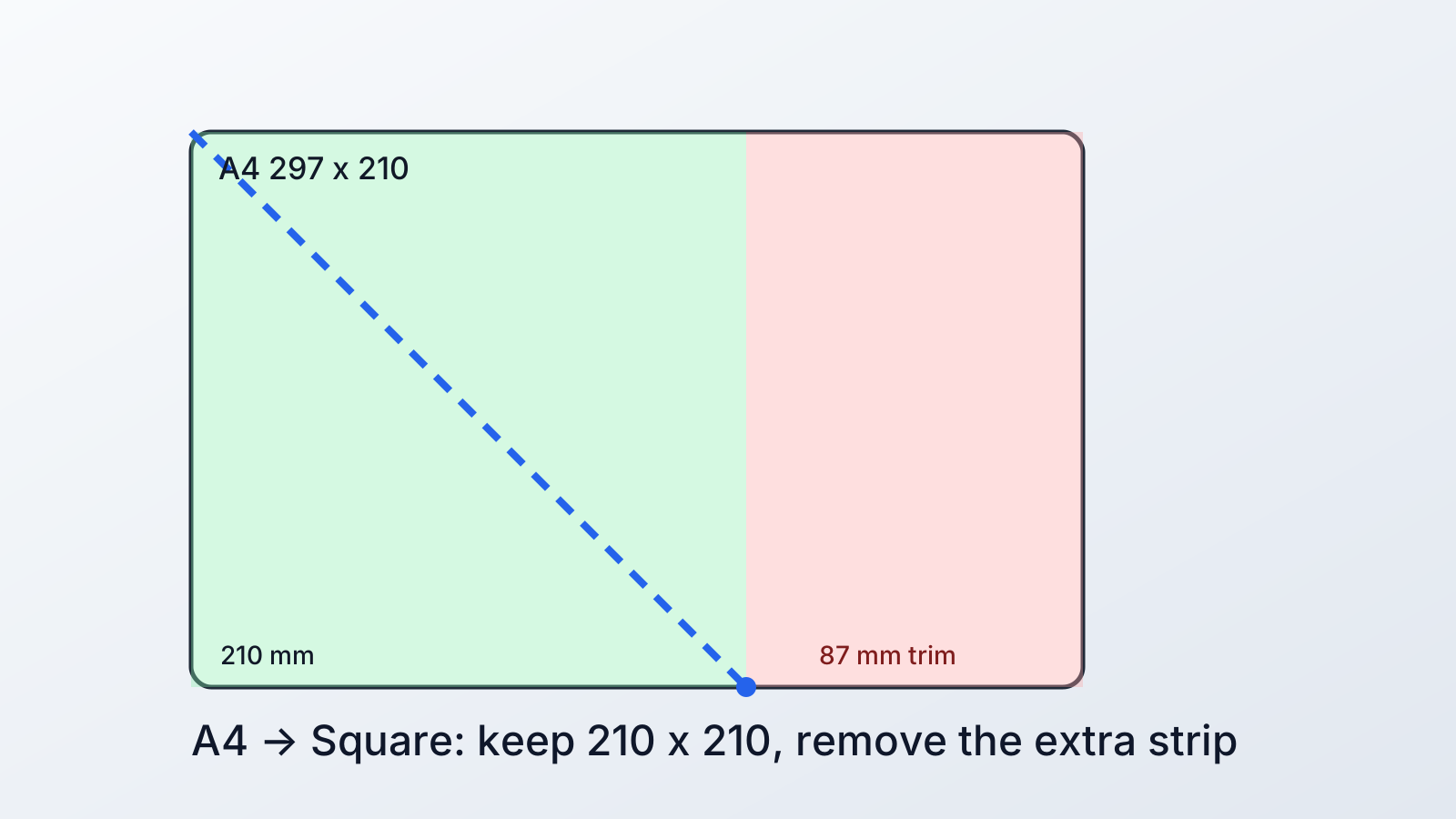
Rabbit Ear Geometry Demo: A4 to Square
Create a diagonal fold, remove the extra strip, and unfold a 210 x 210 square.
Crease (45°)Square areaTrim area
Key dimensions
- Short side: 210 mm
- Long side: 297 mm
- Extra strip: 87 mm
- Resulting square: 210 mm x 210 mm
- Area kept: 70.7%
- Fold angle: 45°
Many origami guides begin with “use a square sheet.”
In real life, most of us only have A4 paper (210mm x 297mm). This tutorial solves that first step cleanly.
Quick Specs
- Difficulty: 1/5
- Time: 2-3 minutes
- Paper: A4 copy paper (70-100gsm)
- Result: 210mm x 210mm square
- Best for: any origami model that starts from square paper
Steps
- Place A4 in portrait orientation.
- Fold the top-left corner diagonally so one edge aligns cleanly with its adjacent side.
- A long extra strip appears on the right.
- Crease the boundary between the square area and that strip.
- Cut (or tear) along that boundary.
- Unfold: the remaining sheet is a square.
Why This Always Produces a Square
This is geometry, not guesswork:
- The short side of A4 is fixed at 210mm.
- The fold constructs a region whose side length equals that short side.
- The extra strip width is
long side - short side = 297 - 210 = 87mm. - Removing that strip leaves
210mm x 210mm. - Equal side lengths mean it is a square by definition.
In other words, we do not “transform” a rectangle into a square. We extract an exact square from it.
FAQ
No scissors?
Fold the boundary back and forth to weaken the fiber, then tear slowly.
Does small error matter later?
Yes. Even 1-2mm drift can hurt symmetry in diagonal models.
Must it be A4?
No. Any rectangle with long side > short side works with the same logic.